Blood Bath
Then came the rainbow Jihadis

On the 29th of August 2003, I stood in a puddle of flesh and blood. Not of my enemies, but of innocent men, women and children. The blood was as high as my heels. I stood there helpless, looking at a limb I recognised, and at other severed body parts scattered around me. The limb belonged to a poor boy, one of three siblings I had spoken with, and bought ice from, a few hours earlier. This was in the holy city of Najaf, in southern Iraq. I was working for TIME Magazine, alongside Bobby Ghosh (@Ghoshworld) and Yuri Kozyrev. Ninety civilians were massacred and more than three hundred injured by a suicide bomber targeting Ayatollah Mohammed Baqir al-Hakim as he left the Shrine of Imam Ali after Friday prayers.
About two hours earlier, I had walked out of my hotel to buy ice to keep our drinking water cool in the brutal August heat. A salesman caught me eyeing his ice blocks and called me over. A few metres to his left stood another wooden three-wheeled trolley, also stacked with ice. That trolley was too heavy for one child to push, so there were three of them, boys somewhere between ten and thirteen years old. The ice seller noticed my attention drift toward the boys and glared at them. The middle brother whispered to his older brother, “Straighten your back and puff out your chest, so you look bigger.” He must have thought that an extra inch on his brother would be enough to fend off the older sellers.
Their small piece of theatre made me laugh, the first time in days, so I bought half a cube of ice from them, a block about a foot square. I spent a few minutes bantering with the middle brother while the eldest cut the ice. The youngest stood listening, in awe that his middle brother could chat so easily with a stranger from out of town.
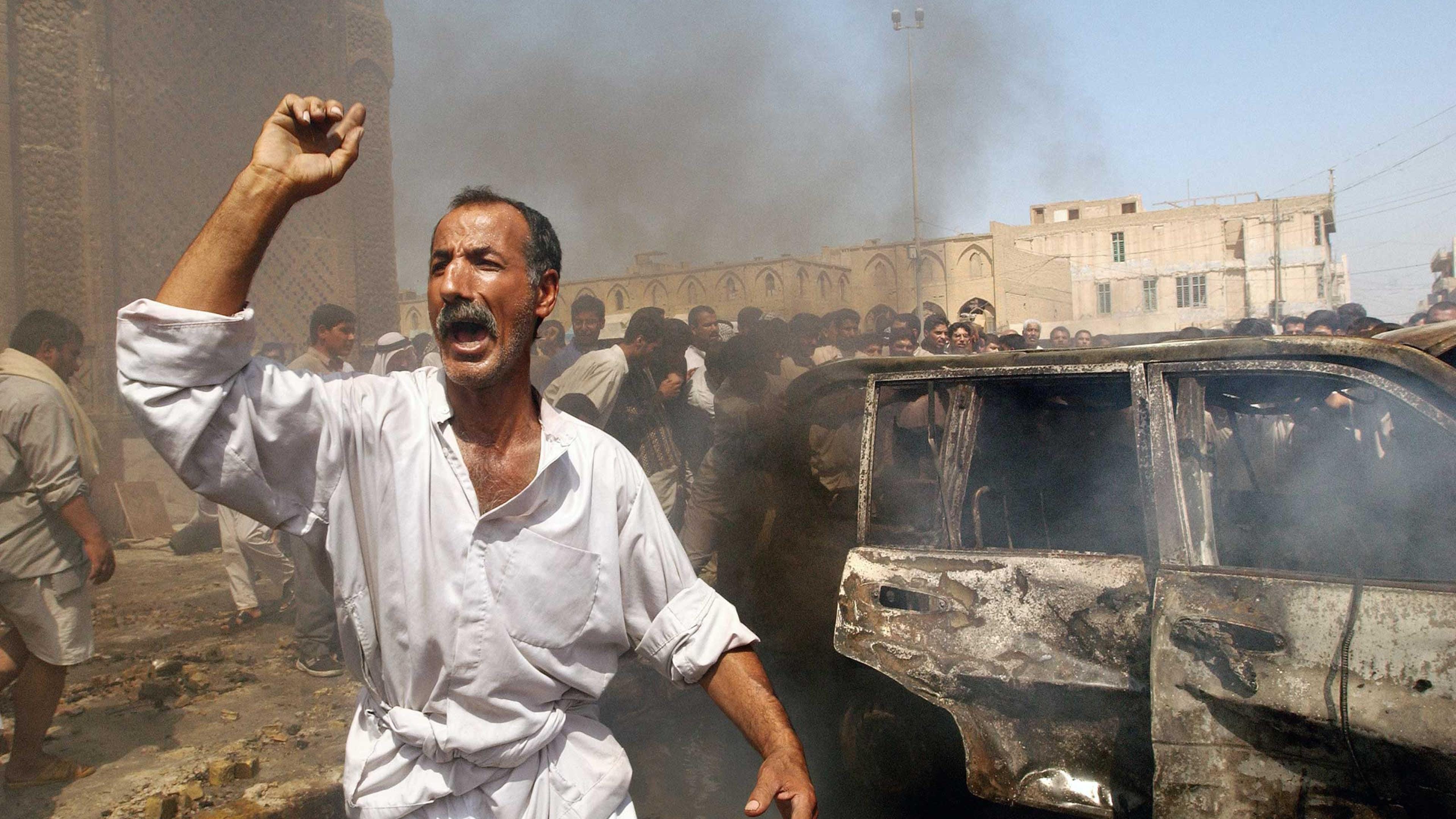
After the bombing, I stood there helpless, looking at that limb. The distinctive checkered sleeve of his shirt was still wrapped around it. It was a bloodbath. I was surrounded by the dead and the wounded; people were screaming, others crying out for the people they loved. Everyone around me was lifting the injured into cars to drive them to hospital. Bobby and Yuri were helping too. And yet I stood there, motionless. I could not bring myself to go and lift that limb. I stood for many minutes just looking at what was left of that little boy, and of his brothers. I was trying to convince myself that the children must have survived, against everything my eyes were telling me.
An old, frail man in traditional farmer’s clothes stepped into me, blocking my view, and muttered something I didn’t catch.
“Pardon me?” I said.
“Has the Ayatollah survived?” he repeated.
Without thinking, I answered, “Yes.”
I gave that old man the very same false hope I was forcing on myself about the boys. He kissed me on both cheeks. “God bless you,” he said, his eyes shining. As he moved away, I saw two men gathering up what remained of the children.
“Meitham!” I heard my name. Bobby had come looking for me.
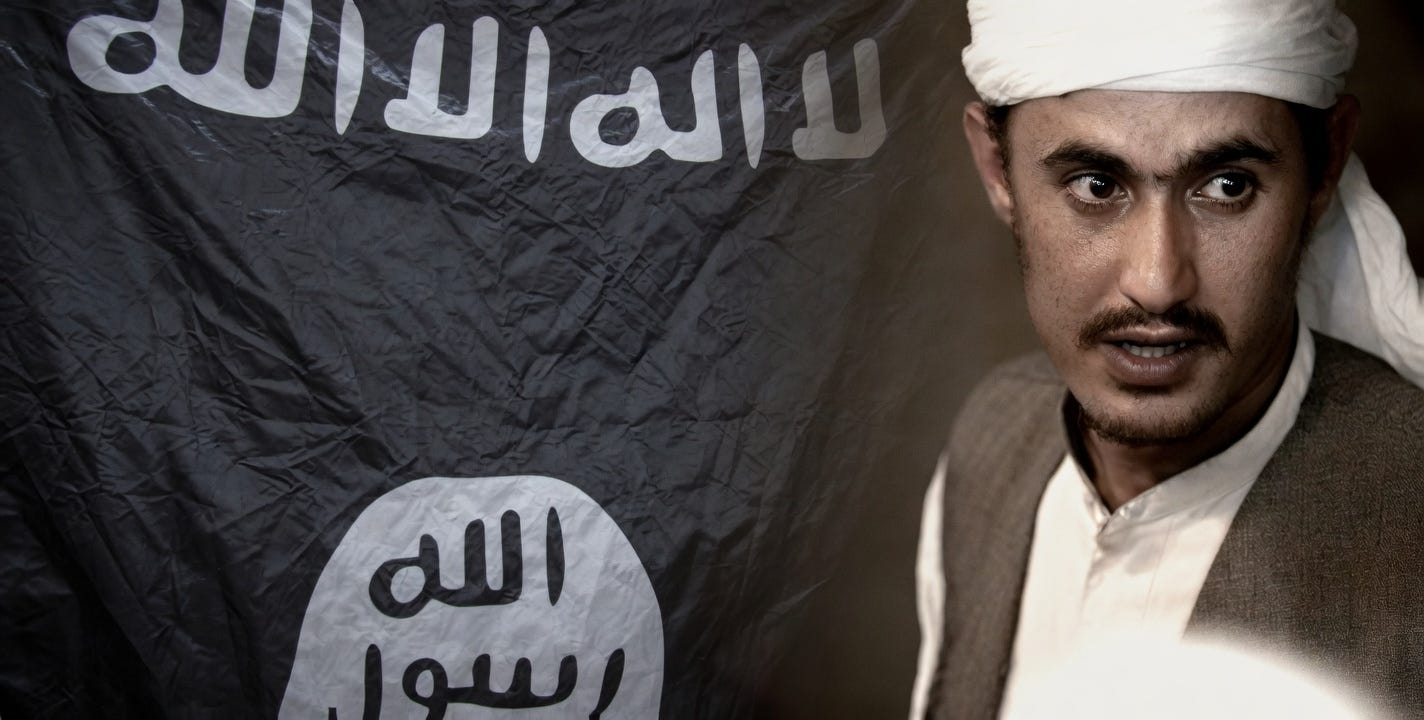
The man who killed those boys belonged to a group called Tawhid wal-Jihad, led by Abu Musab al-Zarqawi. The faction was so extreme that even al-Qaeda regarded it as fanatical, and it would later evolve into what the world came to know as the Islamic State. Its fighters were Salafi-jihadis, a violent fringe of a broader revivalist current that drew on the eighteenth-century teachings of Muhammad ibn Abd al-Wahhab. Most Muslims, of course, want nothing to do with this ideology, and many of its victims came from within their own communities. But the men of these jihadi cells were recognisable on sight: the short thobe cut above the ankle, the long untrimmed beard, the shaved moustache. They were the uniforms of a movement that tore through Iraq killing anyone it could, including, again and again, fellow Muslims.
When the shock of that day finally settled, I phoned my mother. Her heart already knew I had been in Najaf, but I pretended I was safe in a hotel in Baghdad, to spare her. The faces of those boys never left me. Their deaths fuelled a rage in me, and a hatred for the men who had done this. I studied these groups, and eventually I infiltrated them. I changed my name to Haitham. I retrained my accent to the dialect of Mosul. I rewrote my biography into that of a former Saddam’s loyalist. I did whatever I needed to do to gain their trust, to map their networks, to understand their reach and their weaknesses. My hatred for them was without limit, and I was willing to pass what I learned to anyone with a score to settle: Iraqis, Americans, even rival factions of their own.
I became an expert on the teachings of the group's spiritual founder, Abu Muhammad al-Maqdisi, a Palestinian cleric whose writings shaped a generation of jihadi thought. I read what they read. I learned the texts they cited, the rulings they leaned on, the language they used among themselves. When the 7/7 bombings tore through London in July 2005, I was the first to locate the bombers' statement.
There comes a point when hatred has taken so much of your life that you have to walk away from it, or lose yourself in it. I walked away. I relocated to the United Kingdom. I married the love of my life and started a family of my own, leaving the bearded monsters behind me.
— Meitham
This is the first in a series. More to come.