The Uniform Should Not Be a Shield
Why Professionals Must Be Open to Being Challenged

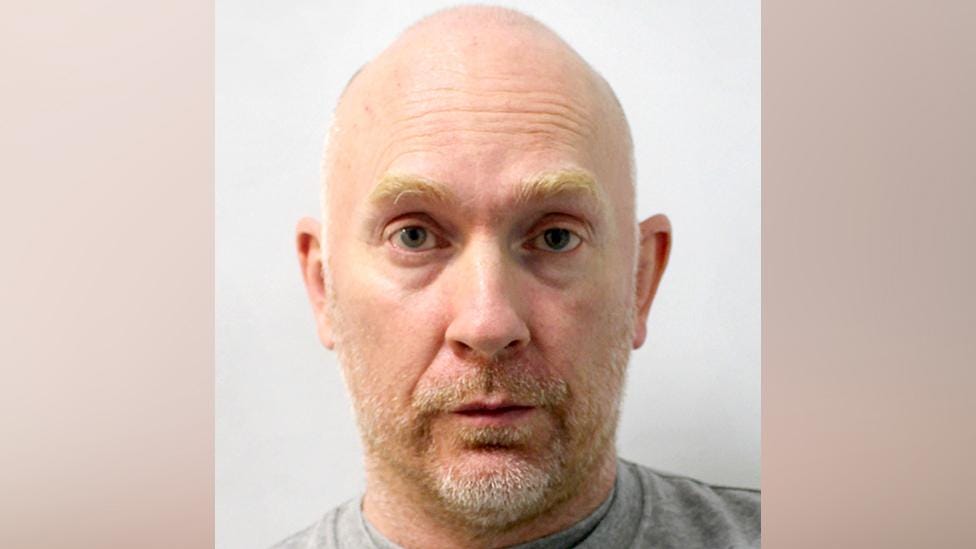
It was a quiet evening in March 2021 when Sarah Everard walked home through south London. By all rights, she should have arrived safely. Instead, she was stopped by a man wearing a police warrant card—Wayne Couzens, a serving Metropolitan Police officer. The uniform did not protect her; it was weaponised against her.

But Couzens was not an anomaly. He was the latest chapter in a long, shameful history of professionals who abused their authority while complaints were dismissed, warnings ignored, and victims silenced.
Consider Jimmy Savile. For decades, the BBC’s golden boy operated behind a facade of respectability while preying on the vulnerable. Warnings were given. Complaints were made. Yet the corporation looked away, protecting its star rather than his victims. One former BBC director who attempted to raise the alarm was simply ignored. It took until after Savile’s death for the full horror to emerge: one of Britain’s most prolific sexual predators had hidden in plain sight, shielded by the very institution that should have exposed him.
Or take the horrors of Mid Staffordshire Hospital, where between 400 and 1,200 patients died unnecessarily between 1996 and 2008. The warning signs were there. Helen Donnelly, an A&E nurse, raised concerns about poor care in 2007 and was met with hostility—colleagues warned her to “watch her back”. Chris Turner, a junior doctor, described the department as “an absolute disaster” and “immune to the sound of pain.” He complained repeatedly to managers. Nothing happened.
Consultant physician Peter Daggett also raised concerns over several years. He too was ignored. Meanwhile, patients lay in soiled sheets, unwashed and unfed, so dehydrated they drank from flower vases. The trust board remained deaf, obsessed with hitting waiting-time targets and achieving foundation status. When Julie Bailey founded the patient pressure group “Cure the NHS” after her mother died in terrible circumstances, the trust dismissed them. It took years of campaigning by grieving families to expose what should have been obvious to anyone willing to look.
Then there is Rotherham, where more than 1,400 children were sexually abused between 1997 and 2013. Police didn’t merely fail to act—they actively chose not to. A senior officer admitted that his force ignored the abuse of girls by Pakistani grooming gangs because it feared increasing “racial tensions”. One chief inspector told a missing child’s distraught father that the town “would erupt” if it became known that Asian men were routinely having sex with underage white girls. The officer allegedly described the abuse using racist slurs and said: “With it being Asians, we can’t afford for this to be coming out”.
For decades, police forces across the north and Midlands denied that concerns about community sensitivities influenced their failure to tackle grooming gangs. The IOPC’s investigation proved otherwise. Children were failed not by accident, but by design—sacrificed on the altar of political correctness and institutional cowardice.
Take Stephen Ireland, the charismatic founder of Pride in Surrey. For years, he was celebrated as a local hero, a champion of inclusion, a trusted voice in the community. He ran a helpline for vulnerable young people. He advised councils. He was given access to children.
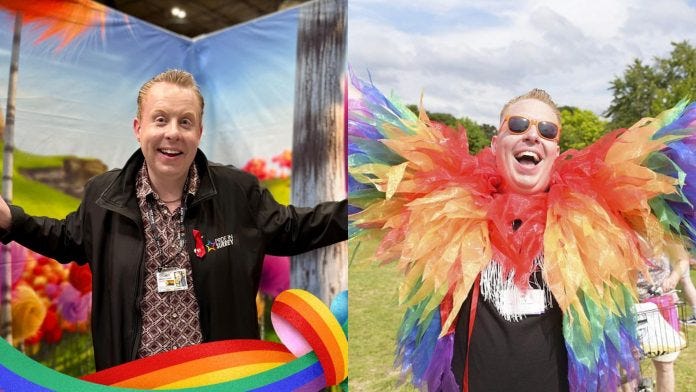
And when Rebecca Paul—then a Surrey County councillor, now a Conservative MP—raised concerns in 2021 about a “deeply concerning photo” of Ireland with a child, what happened? She was met with an informal complaint against her by council officers. She was asked to stop communicating with staff on equality and diversity matters. Within two weeks, she was removed from her EDI portfolio.
The alarm had been raised. The system’s response? Shoot the messenger.
Ireland was finally convicted in 2025 of raping a 12-year-old boy and multiple other child sexual offences, receiving a 24-year sentence. But by then, the damage was done. And the question remains: how many warnings were dismissed, how many voices were muted, before justice finally caught up?
This is not an isolated story. It is a pattern.
And let us not forget Gosport War Memorial Hospital, where 456 patients died after being given dangerous levels of opiates between 1987 and 2001. Families raised alarms. They were fobbed off. Police investigations came and went without charges. Even now, more than two decades later, families are still fighting for justice as fresh inquests are ordered.
These are not isolated failures. They reveal a pattern as predictable as it is pernicious: when professionals are granted authority without accountability, when institutions prioritise reputation over truth, when complaints are treated as inconveniences rather than warnings—disaster follows.
Why does this happen? Partly because challenging authority feels unnatural. The Stanley Milgram experiments at Yale in the 1960s demonstrated that ordinary people will comply with authority figures even when instructed to do harm. In Britain, this is compounded by cultural reserve. We don’t make scenes. We don’t question those in uniform. We trust the system.
That trust is necessary—most professionals are conscientious, many go far beyond their duties. But institutions are not abstract entities; they are collections of fallible human beings. The badge does not sanctify the wearer. The title does not erase the capacity for evil or incompetence.
Every profession operates within boundaries. Police officers have powers defined by law. Doctors have duties to their patients. Teachers have responsibilities to their students. These boundaries are known as remit. When professionals operate beyond them without accountability, the system rots. Sometimes it is bureaucratic incompetence. Sometimes ideological overreach. Sometimes criminality.
The lesson is brutal but clear: institutions are only as trustworthy as the accountability that surrounds them. And that accountability cannot reside solely with oversight bodies or internal investigations, which too often resemble guilds protecting their own. It must also reside with the citizen.
Respectfully questioning authority is not an act of subversion; it is a civic duty. Asking for identification, demanding the legal basis for a stop, requesting documentation—these are not hostile gestures. They are reasonable checks on power. A professional acting within the law should welcome transparency; it is only those operating in the shadows who fear the light.
Sarah Everard should have arrived home that night. Her death forced a national reckoning. But the broader imperative extends beyond the Met. Authority must never be immune from scrutiny. Professionals deserve respect, but respect should not demand silence.
The families of Mid Staffordshire learned this lesson through grief. The children of Rotherham learned it through trauma. The victims of Savile learned it through betrayal. Their suffering was not merely the result of individual evil, but of systems that chose comfort over courage, reputation over truth.
The ability to challenge decisions and demand accountability is not a threat to the state. It is the only thing that keeps the state worthy of our trust. When authority is never questioned, it becomes dangerous. When it is responsibly challenged, it becomes strong.
Trust, but verify. Respect, but question. Because the uniform should protect the innocent—not shield the guilty.